Polyphenol Extract Sourcing for Supplement and Ingredient Brands
2026年10月16日 · 10 min read
Nourish Ingredients helps B2B buyers source polyphenol extracts through qualified manufacturing partners, with specification matching, sample coordination, documentation review, and testing support based on project requirements.
Polyphenol Extracts We Can Coordinate
Polyphenol is a broad compound class rather than a single specification. Sourcing therefore starts from the botanical source and from the marker you intend to declare, not from the category name alone. A request that only says “polyphenol extract” cannot be quoted reliably, because total polyphenol content, single-marker content and extract ratio are three different commercial bases.
The routes below are examples of polyphenol-containing materials we have coordinated for B2B projects. Availability, grade and documentation scope are confirmed per project and per lot, and we will tell you at the outset if a requested grade is not available from the partners we work with.
The first decision is usually whether to specify a total-polyphenol value or a single-marker value. A total-polyphenol specification is broader and generally easier to source across partners, but it is more sensitive to the assay method used and is harder to compare between suppliers. A single-marker specification gives a tighter target and is easier to verify on arrival, but it narrows the number of viable production routes and can affect both price and lead time. Neither is better in the abstract; the right choice depends on what your finished-product documentation has to declare and on how your incoming quality control will verify the material.
Polyphenol materials are most often requested for dietary supplement and functional food formats, and the application context for that route is described on the dietary supplement solutions page.
Sourced from Vitis vinifera seed and specified against OPC or total polyphenol content, depending on how your specification is written. This is the most frequently requested polyphenol route in our project history. Current grades, including the water-soluble option for beverage work, are listed on the grape seed OPC specification page.
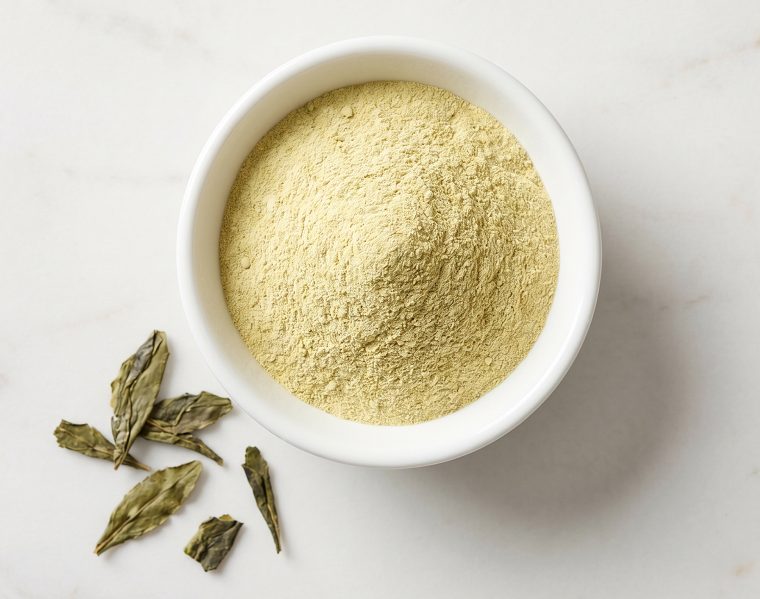
Green Tea Extract (Tea Polyphenols / EGCG)
Specified against total tea polyphenols, total catechins or EGCG, depending on the formulation brief and on the claim basis used in your market. A decaffeinated option is available where caffeine content is restricted by the finished product. Grades and the documentation set currently offered are shown on the green tea EGCG specification page.
Olive Extract (Hydroxytyrosol)
Supplied against hydroxytyrosol content, with several hydroxytyrosol levels available depending on the grade your formulation requires. Olive polyphenols are also specified against oleuropein in some markets, so the marker and the method should be stated before we approach partners. Current levels are listed on the olive hydroxytyrosol specification page.
Caffeic Acid 98% (Plant-Derived Polyphenol)
Used where a defined single-compound polyphenol is specified rather than a total-polyphenol value. This route suits projects that declare a specific compound on the specification sheet. Specifications and derivative options are listed on the caffeic acid 98% page.
Other polyphenol-containing botanicals, including resveratrol grades, anthocyanin-rich berry extracts and quercetin grades, may be reviewed on request where the target specification is defined in advance. Where a route is outside the partners we currently work with, we will say so rather than quote against a grade we cannot document.
Specification Matching: What to Confirm Before Quoting
Most delays and price disputes on polyphenol projects come from an incomplete specification, not from supply availability. The following items are the ones we ask for before a quotation is prepared. Each item is confirmed per project, because the answer determines which production partner and which grade is viable.
Botanical identity, including the Latin binomial and the plant part used, since the same common name can refer to different species and different plant parts.
Marker or assay target, together with the analytical method and the reporting basis the value is expressed on.
Extract ratio or concentration basis, exactly as it will be stated on your specification sheet and finished-product documentation.
Carrier or excipient declaration where a carrier is used, including the carrier percentage and the carrier identity.
Physical format, including appearance, moisture expectations, particle-size range, and whether solubility or dispersibility in water is required.
Intended application and finished-product format, whether capsule, tablet, powder blend, ready-to-drink beverage or topical formulation, since these differ in solubility and stability requirements.
Destination market, because documentation scope, contaminant limits and labelling requirements follow the market you ship to.
Comparing quotations on percentage alone is not reliable. Two offers that both state the same percentage can describe different materials, because the result depends on the assay method, the calibration standard and the basis the result is reported on. A spectrophotometric total-polyphenol value and an HPLC single-marker value are not interchangeable, and a value quoted on extract weight is not the same as the same value quoted on dry-matter basis.
For that reason we ask for the full method statement as part of any comparison. Where two candidate grades meet the same declared target, we present the difference in method and basis rather than only the difference in price, so that the comparison is made on equivalent terms. This step is completed before a commercial quotation is issued, not after.
Where you are switching from an existing supplier, the fastest route is to send the current specification sheet and the most recent batch Certificate of Analysis. That lets us confirm whether your incumbent method can be reproduced by the candidate partner, rather than assuming it can. If the incumbent method cannot be reproduced, we say so at that point and propose either an equivalent method with a documented correlation, or a re-validation on your side. Silently substituting a different method to match a number is the single most common cause of disputes on arrival, so we do not do it.
If a specification item is genuinely unknown at enquiry stage, tell us which item it is. An open item that is declared in advance can usually be resolved during sampling; an open item discovered at production stage usually cannot, and it is the reason a first order slips.
Quality Documentation and Testing Coordination
Documentation is coordinated with production partners and is confirmed per project and per product. Typical document scope includes a product specification sheet, a batch Certificate of Analysis, botanical or plant-part statements, allergen and Non-GMO statements, and safety data files. Which of these are available depends on the material and on the facility producing the lot, and we confirm the list before you place an order rather than after.
Testing scope is reviewed against the specification and against the destination market. Typical review items include identity, assay result, moisture and ash, heavy metals, microbiological limits, pesticide residues and residual solvents. Third-party laboratory testing is arranged where the project requires it, and the results are provided as part of the batch file.
Certificate scope, holder and validity are stated on the documents provided for the specific lot. Where a certificate does not cover the material or the facility in question, that is stated rather than implied. Our testing and supplier verification process is described in more detail on the quality control page.
Traceability is handled at batch level. Each commercial lot is referenced to its production batch and to the partner that produced it, so that a question raised months after delivery can still be traced back to the batch record and to the documents issued for that lot. Where a project requires retained samples, retention terms are confirmed before the order is placed rather than assumed.
Production partners maintain FSSC 22000, BRCGS, EU Organic, USDA Organic and FAMI-QS certifications. Documentation is available upon request. Certificate availability varies by product and by manufacturing partner, so we confirm which certificates apply to the specific lot you are buying. Our role as a sourcing partner, rather than as a single-site producer, is described on the about us page.
How a Polyphenol Sourcing Project Runs
Requirement review. The botanical direction, marker target, application and destination market are confirmed before any quotation is prepared.
Production partner matching. Candidate partners are screened against the specification, the grade availability and the documentation scope required.
Sample coordination. Samples are arranged for qualified B2B projects, with sample size, fees and shipping confirmed by specification and destination.
Documentation review. Specification sheets and batch documents are reviewed against the agreed scope before the material is approved.
Testing arrangement. Required testing is confirmed and arranged, including third-party laboratory testing where the project specifies it.
Production and export. Commercial quantity, packaging, storage expectations and destination-market documentation are aligned before dispatch.
The sequence is the same for a first trial order and for a repeat order, although the documentation review step is shorter once a grade has been approved and the method statement is on file.
Request a Quote or Sample
Send the botanical direction, the marker target with the analytical method, the extract ratio or concentration basis, the intended application, the expected quantity, and the destination market. If you already have a specification sheet, sending it at the outset is the fastest route to a comparable quotation.
Quote and sample requests are handled through the contact page. Buyer identity and intended use are confirmed before samples are dispatched.
Frequently Asked Questions
What is the minimum order quantity for polyphenol extracts?
MOQ varies by ingredient, specification, packaging and supplier arrangement. Please contact us to confirm the MOQ that applies to the specification you are requesting, since a standard grade and a custom grade on the same botanical can carry different minimums.
Can you supply standardized polyphenol grades?
Standardized grades depend on the material and the production route. Where a standardized grade is required, the marker target, the assay method and the acceptable commercial range are confirmed before sampling, so that the first sample is produced against the basis you will actually report.
Which documents can be reviewed before ordering?
Depending on the material and facility, document scope may include a product specification, a batch Certificate of Analysis, botanical or plant-part statements, allergen and Non-GMO statements, and safety data files. Scope is confirmed per project and is listed before order placement.
Can testing be arranged for heavy metals and pesticide residues?
Yes. Testing scope is reviewed against the specification and the destination market, and third-party laboratory testing can be arranged where the project requires it. Results are supplied with the batch file.
Can documentation be matched to a specific destination market?
Documentation scope is confirmed against the destination market before dispatch. We do not provide regulatory or market-approval advice, and we recommend confirming market requirements with your own regulatory adviser.
How long does sampling and delivery take?
Lead times vary by specification, sampling route and destination. Typical timelines are confirmed after specification alignment rather than quoted in advance, because a grade that is in stock and a grade that requires production are on different timelines.
Which certifications apply to the material?
Production partners maintain FSSC 22000, BRCGS, EU Organic, USDA Organic and FAMI-QS certifications. Documentation is available upon request, and certificate holder, scope and validity are stated on the lot documents provided.
Compliance Note
Statements not evaluated by FDA. Information provided for ingredient evaluation only.
Data marked as “typical” reflects industry standards; specific values vary by supplier and batch. Documentation including COA, MSDS, allergen, and Non-GMO documentation is available upon request from production partners.