
Dietary Supplements
Weight Management Supplements: Active Ingredients & Sourcing Guide
Weight management supplements represent one of the largest and most dynamic segments in the global dietary supplement market. For B2B…
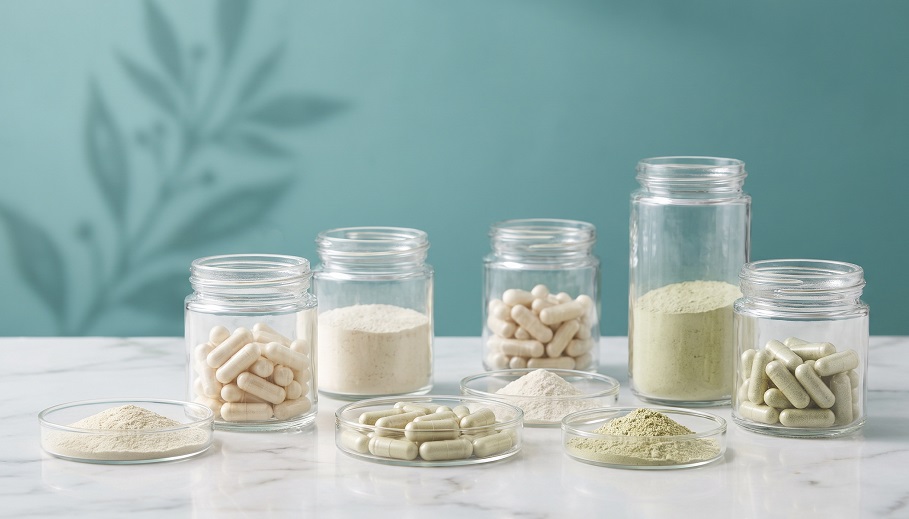
Weight management is one of the most contested categories in the supplement industry. The market opportunity is large, the evidence base is uneven, and the regulatory risk for over-claiming is real.
For B2B formulators, the most defensible approach in 2026 is to build a multi-ingredient formula around ingredients with at least moderate human evidence, deliver each ingredient at a clinically-supported dose, and avoid disease-treatment claims. This article walks through a practical framework using three ingredients that pair well: DNJ (1-deoxynojirimycin from mulberry leaf), berberine HCl, and gymnemic acid (from gymnema sylvestre).
Each of these ingredients targets a different node in glucose and carbohydrate metabolism:
When combined, the three ingredients act at different points in the metabolic pathway: digestive enzymes (DNJ), cellular energy sensing (berberine), and intestinal glucose transport (gymnema). The combination is not a “magic bullet” — but it is mechanistically plausible and supported by individual ingredient evidence.
The doses below are consistent with the published human evidence for each ingredient, and they fit comfortably in a 2-capsule daily serving at typical extract concentrations.
DNJ (from mulberry leaf extract, 5% standardization)
– 10–20 mg DNJ per serving
– Equivalent to 200–400 mg of 5% extract
Berberine HCl
– 500 mg per serving, two or three times daily (total 1,000–1,500 mg/day)
– This dose range matches the more rigorous human trials
– Formulators often split across meals to reduce GI side effects
Gymnemic acid (from gymnema sylvestre leaf extract, 25% standardization)
– 200–400 mg of 25% extract per serving
– Equivalent to 50–100 mg gymnemic acid
Chromium (optional fourth)
– 200–400 mcg as chromium picolinate
– Evidence is mixed, but low-dose chromium is a common co-factor in this category
Pitfall 1: Under-dosing berberine
Many commercial products contain 100–200 mg berberine. The clinical evidence that matters is at 500 mg per dose, two or three times daily. If your capsule cannot fit 500 mg berberine, you are selling a different product.
Pitfall 2: Ignoring berberine bioavailability
Berberine has notoriously low oral bioavailability (under 5% in some studies). Consider:
– A liposomal or phytosomal form
– Co-administration with a small amount of healthy fat
– Splitting the dose across the day
Pitfall 3: Mixing ingredients without checking for interactions
If your formula contains alpha-lipoic acid, chromium, or high-dose cinnamon extract, double-check the combined metabolic effect with a regulatory consultant.
Pitfall 4: Over-claiming
Do not claim any of these ingredients “treats diabetes” or “causes weight loss.” Use structure-function language tied to the dose you actually deliver.
Always work with regulatory counsel in your destination market before finalizing label copy.
The three ingredients should be sourced from suppliers who can provide:
If any supplier cannot provide these, that ingredient becomes your weakest link in the formula. One weak supplier undermines the entire product story.
Looking for a single supplier that can deliver DNJ, berberine HCl, and gymnemic acid at clinical doses — with full documentation? Talk to us about a multi-ingredient quote for your next weight-management SKU.
Nourish Ingredients | ashely@nourishingr.com | www.nourishingr.net
Weight management supplements represent one of the largest and most dynamic segments in the global dietary supplement market. For B2B…

A Certificate of Analysis (COA) is the single most important document in any botanical extract purchase. It tells you what…
Pet food manufacturers face a growing challenge: consumers want clean-label products without synthetic preservatives like BHA, BHT, or ethoxyquin, but…