Manufacturer vs Distributor: Botanical Extracts Guide
July 8, 2026 · 12 min read
Why This Decision Matters for Buyers
For US and EU buyers sourcing botanical extracts, the choice between a manufacturer and a distributor (or company) is one of the most consequential business decisions. The two models offer different trade-offs across cost, lead time, customization, and quality control.
A 2024 industry survey of botanical extract buyers found:
48% of buyers work with a mix of manufacturers and distributors
31% source exclusively from manufacturers (direct factory relationships)
21% source exclusively from distributors (trading companies)
The remaining buyers source through brokers or agents
The most common reasons for choosing a manufacturer:
Lower cost (15-30% typical savings)
Direct customization capability
Better quality control
Direct relationship with operations
The most common reasons for choosing a distributor:
Lower minimum order quantity
Faster delivery
Multiple ingredient sourcing
US-based team and language
This guide helps buyers evaluate which model is right for their specific situation.
Understanding the Two Models
Botanical Extract Manufacturer
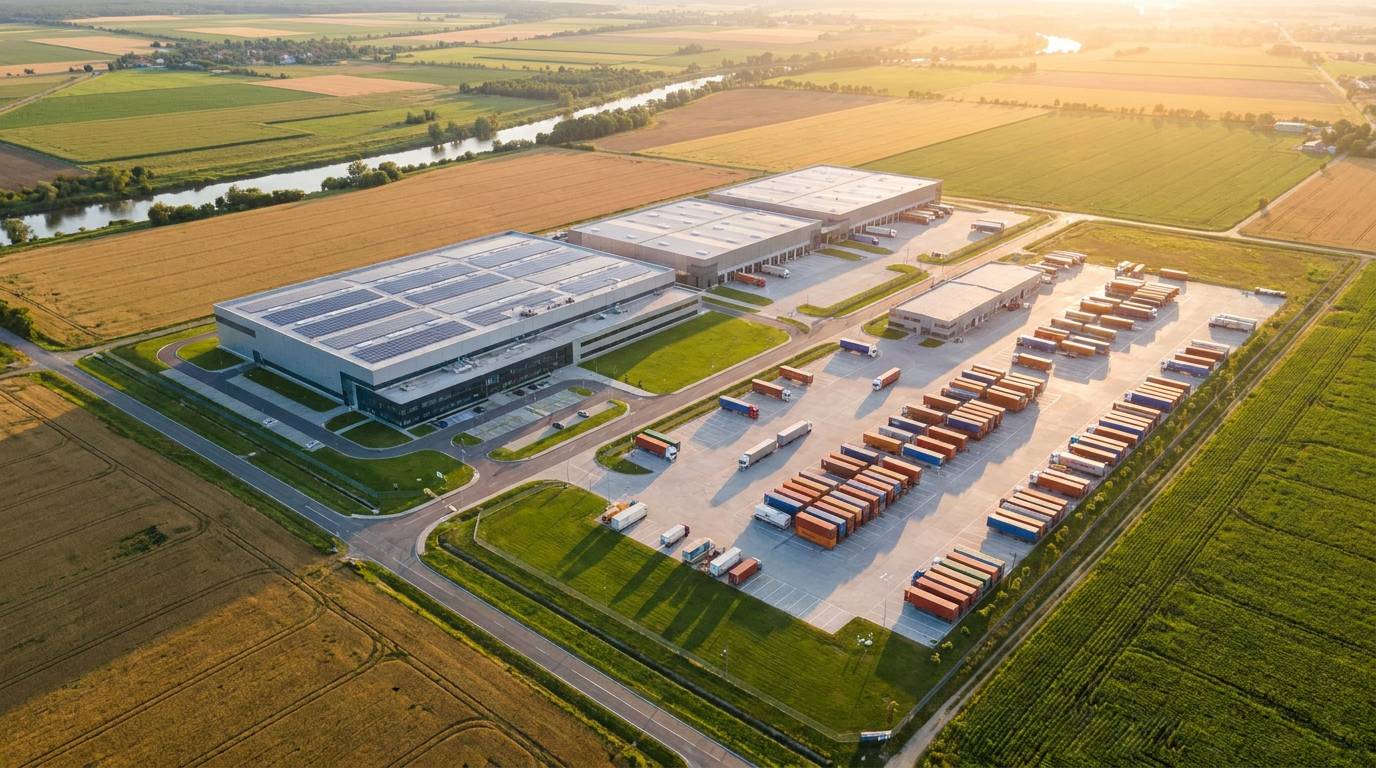
A manufacturer operates the production facility that extracts and processes botanical raw materials into standardized extracts. They own the equipment, manage the production process, and are responsible for quality control at the production site.
Typical manufacturer structure:
– Production facility (often in China, India, or other origin countries)
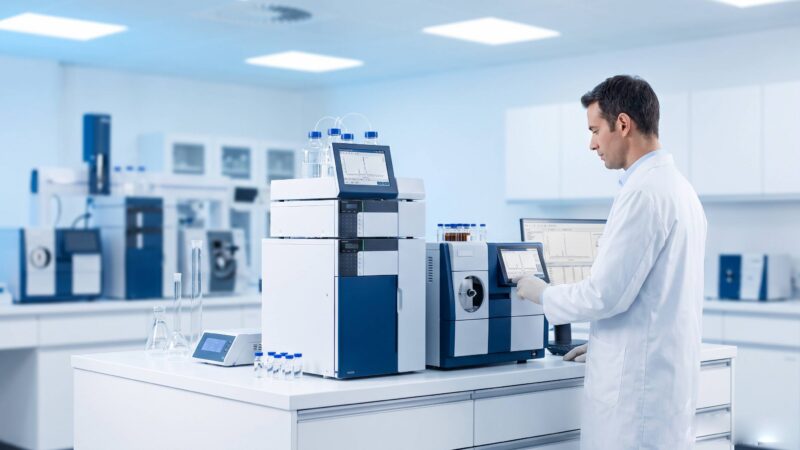
– QC laboratory on-site
– Quality system (FSSC 22000, BRC, ISO 9001, etc.)
– Sales team (often working through distributors or trading companies)
– May or may not have English-speaking sales team
– May or may not have direct US/EU presence
Examples of manufacturer functions:
– Rosemary extract from leaf to standardized powder
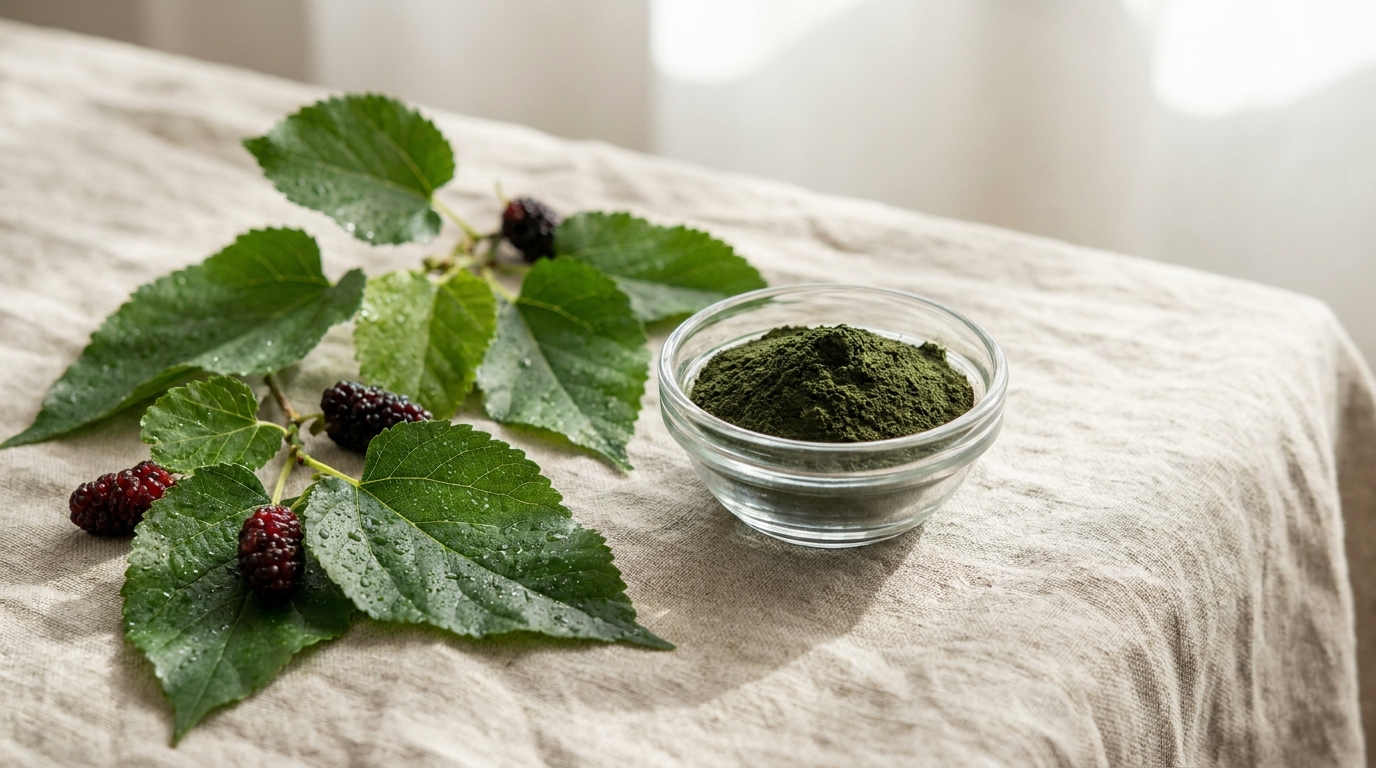
– Mulberry leaf extract from leaf to DNJ-standardized powder
– Grape seed extract from seed to OPC-standardized powder
Botanical Extract Distributor (Company)
A distributor sources botanical extracts from one or more manufacturers and resells to buyers. They provide value through:
Sourcing: Identifying suitable manufacturers for buyer specifications
Quality coordination: Working with manufacturers on QC and documentation
Logistics: Shipping, customs, warehousing
Documentation: COA, MSDS, certificates, regulatory support
Communication: Bridge between buyer and manufacturer (often across time zones)
Examples of distributor functions:
– Sourcing 3 candidate manufacturers for a buyer inquiry
– Coordinating sample selection and shipping
– Managing multi-supplier logistics
– Providing consolidated documentation
– Handling US import compliance
Direct Comparison: Manufacturer vs Distributor
1. Cost Structure
Cost Component
Manufacturer
Distributor
FOB China price
$25-50/kg (typical)
$30-60/kg (typical)
Distributor markup
N/A
15-30% over manufacturer FOB
Sample cost
$50-200 per sample
$50-200 per sample (often absorbed)
Custom specification
Often at no extra cost
Often at no extra cost
MOQ
25-100 kg
5-25 kg (distributor flexibility)
Total cost comparison for a 100 kg order:
– Direct from manufacturer: $25 × 100 = $2,500 (FOB) + shipping
– Through distributor: $35 × 100 = $3,500 (CIF) + maybe additional service fees
When manufacturer is cheaper:
– Large volume orders (>500 kg per shipment)
– Repeat orders over time
– Buyer has import capabilities (customs, freight forwarding)
When distributor is cheaper:
– Small volume orders (<100 kg per shipment)
– Mixed ingredients (consolidate through one distributor)
– Buyer has no import infrastructure
2. Lead Time and Delivery
Phase
Manufacturer
Distributor
Sample stage
2-3 weeks
1-2 weeks (samples often in stock)
Pilot order
4-6 weeks
3-4 weeks (uses stock or production)
Routine commercial order
3-4 weeks (after deposit)
1-2 weeks (if stock available)
Custom specification
6-8 weeks
5-7 weeks
Why distributors are faster:
– They often hold safety stock of common ingredients
– They coordinate production with multiple manufacturers
– They have established logistics networks
Why manufacturers can be slower:
– They only produce on order
– They may have multiple buyers in queue
– Production scheduling requires advance notice
When manufacturer lead time works:
– Routine production with 4-6 weeks planning horizon
– Custom specifications
– Large volume orders
When distributor lead time works:
– Small urgent orders
– Trial orders for new buyers
– Mixed ingredients needed quickly
3. Minimum Order Quantity (MOQ)
Buyer Type
Manufacturer MOQ
Distributor MOQ
Small (annual < $50,000)
50-100 kg minimum
5-25 kg minimum
Medium (annual $50,000 – $500,000)
100-500 kg
25-100 kg
Large (annual > $500,000)
500-2000 kg
100-500 kg
Why manufacturers have higher MOQs:
– Production efficiency (small batches are expensive)
– Raw material sourcing (must commit to larger volumes)
– Setup costs (cleaning, calibration, etc.)
Why distributors can offer lower MOQs:
– They aggregate demand across multiple buyers
– They hold safety stock
– They can split larger manufacturer orders
4. Customization Capability
Type of Customization
Manufacturer
Distributor
Active compound content
✓ Direct
Limited (depends on manufacturer)
Particle size
✓ Direct
Limited
Carrier material
✓ Direct
Limited
Water-soluble vs oil-soluble
✓ Direct
Limited
Custom blend (multiple extracts)
Sometimes
✓ Direct (distributor can blend)
Custom packaging
✓ Direct
Limited
Custom branding
Sometimes
✓ Often (distributor specializes)
When manufacturer is better for customization:
– You need specific active compound content
– You need specific carrier material
– You need specific extraction method
When distributor is better for customization:
– You need a blend of multiple extracts
– You need custom branding
– You need custom packaging at retail-ready level
5. Quality Control
QC Aspect
Manufacturer
Distributor
Production-line QC
✓ Direct (on-site)
Indirect (audits manufacturer)
Batch testing
✓ Direct (in-house lab)
Indirect (relies on manufacturer)
Stability studies
✓ Direct
Indirect
Method validation
✓ Direct
Indirect
Quality issue investigation
✓ Direct (on-site investigation)
Limited (manufacturer’s responsibility)
Why manufacturers are better for QC:
– They own the production process
– They have direct access to QC lab
– They can investigate issues on-site
Why distributors can be effective for QC:
– They can audit and verify manufacturer quality systems
– They can run independent third-party testing
– They can manage quality issues on buyer’s behalf
6. Communication and Time Zones
Aspect
Manufacturer
Distributor
Sales team location
China, India, etc.
US, EU, or bilingual
Time zone coverage
12-15 hours ahead of US
Often US-based or overlapping
Response time
24-48 hours
4-12 hours
Language
Chinese, English (varies)
English (usually native)
Cultural fit
May need adaptation
Usually aligned with buyer
When manufacturer communication works:
– Buyer is in China time zone
– Buyer has bilingual team
– Long-term relationship with dedicated China team
When distributor communication works:
– Buyer is in US/EU time zone
– Buyer prefers native English communication
– Buyer wants frequent updates and rapid response
7. Documentation and Compliance
Document
Manufacturer
Distributor
COA (Certificate of Analysis)
✓ Direct
✓ Direct (from manufacturer)
MSDS
✓ Direct
✓ Direct
Country of Origin
✓ Direct
✓ Direct
Customs documentation
Sometimes
✓ Often (distributor handles)
FDA Prior Notice
Sometimes
✓ Often (distributor handles)
Regulatory support
Sometimes
✓ Often (distributor expertise)
Recall support
✓ Direct
Limited (must coordinate with manufacturer)
Why manufacturers can struggle with documentation:
– They may not have US regulatory expertise
– They may not have FDA Prior Notice capability
– They may not handle US customs regularly
Why distributors can be better for documentation:
– They handle US/EU compliance daily
– They have FDA registration and DUNS numbers
– They can manage customs broker relationships
4 Sourcing Models to Consider
Model 1: Direct from Manufacturer (Largest Buyers)
Best for:
– Annual spend > $500,000 per ingredient
– Predictable monthly demand
– Has import infrastructure (customs broker, freight forwarder)
– Has bilingual or China-based team
Pros:
– Lowest cost (15-30% savings)
– Direct quality control
– Direct customization
– Direct relationship with operations
Cons:
– Higher MOQs
– Longer lead times
– Requires import infrastructure
– Time zone challenges
Model 2: Through Distributor (Most Common)
Best for:
– Annual spend $50,000 – $500,000 per ingredient
– Mixed ingredient portfolio
– No import infrastructure
– US/EU time zone preference
Pros:
– Lower MOQs
– Faster delivery
– Single point of contact
– Documentation support
Cons:
– 15-30% higher cost
– Less direct quality control
– Limited customization
– Dependency on distributor
Model 3: Hybrid (Strategic Buyers)
Best for:
– Annual spend > $200,000
– Multiple ingredients
– Mix of routine and custom needs
Approach:
– Direct from manufacturer for high-volume routine ingredients
– Through distributor for low-volume, mixed, or specialized ingredients
Cons:
– Complex supplier management
– Multiple quality systems to monitor
– More relationships to manage
Model 4: From US-Based Distributor with Chinese Manufacturing Partners
Best for:
– US buyers with no import capability
– Need for fast delivery (1-2 weeks)
– Small to medium volume orders
Examples:
– US-based ingredient distributors with China sourcing
– Trading companies with US warehouse
Pros:
– Fast US delivery
– No import management
– Native English communication
– Domestic currency
Cons:
– 30-50% higher cost
– Limited stock for some ingredients
– Less customization
Decision Framework: Manufacturer vs Distributor
Step 1: Define Your Requirements
Before choosing, define:
– Annual volume per ingredient
– Number of ingredients
– Required lead time
– Customization needs
– Quality verification capability
– Import infrastructure
– Team language and location capability
Step 2: Calculate Total Cost of Ownership
For each potential model, calculate:
– FOB/CIF product cost
– Shipping cost
– Customs duty and fees
– Warehousing cost
– Quality verification cost
– Communication overhead cost
– Risk mitigation cost
Before committing to a model, test with:
– 1-2 manufacturers for direct sourcing
– 1-2 distributors for indirect sourcing
– Pilot orders of 100-500 kg each
– Side-by-side quality and service comparison
Step 5: Build a Diversified Supply Base
Best practice is to have:
– At least 2 sources for each critical ingredient
– Mix of manufacturer and distributor relationships
– Geographic diversification
– Backup suppliers for each ingredient
Common Mistakes When Choosing a Sourcing Model
Mistake 1: Always Choosing the Lowest Cost
The lowest cost option often has hidden costs:
– Quality issues requiring rework
– Shipping delays causing stockouts
– Documentation errors causing customs issues
– Communication friction causing misunderstandings
Solution: Calculate total cost of ownership, not just product cost.
Mistake 2: Choosing a Distributor Without Auditing Their Manufacturers
A distributor is only as good as their manufacturers. If the distributor’s manufacturers are not FSSC 22000 certified, the distributor is not a quality partner.
Solution: Always request the manufacturer’s certificates and visit the manufacturing facility.
Mistake 3: Choosing a Manufacturer Without Import Capability
Direct sourcing from a manufacturer requires import capability. If the buyer does not have a customs broker and freight forwarder, direct sourcing is not viable.
Solution: Establish import infrastructure first, then move to direct manufacturer relationships.
Mistake 4: Not Considering Communication and Time Zones
Communication friction is a real cost. A 12-hour time zone difference with 24-hour response time slows every decision.
Solution: Choose a model with responsive communication for your time zone.
Mistake 5: Single Source Dependency
Relying on a single source (whether manufacturer or distributor) is a major risk. Quality issues, supply disruptions, or business changes can leave you without supply.
Solution: Always have backup sources for each critical ingredient.
How Nourish Ingredients Operates
We operate as a botanical extract distributor with deep relationships with audited manufacturing partners in China. Our role is to:
Identify the right manufacturing partner for each buyer’s specific requirements
Coordinate sample selection and testing with multiple manufacturers
Manage quality documentation including COA, MSDS, and certifications
Handle logistics from China to buyer destination (FOB, CIF, or DDP)
Provide ongoing support for quality, regulatory, and application questions
Manage backup sources for each ingredient to ensure supply continuity
For buyers evaluating sourcing models, provided a comparison including:
– Direct manufacturer pricing
– Distributor pricing with our service
– Lead time and MOQ comparison
– Quality and documentation comparison
For buyers comparing manufacturer vs distributor sourcing, contact us to discuss your specific situation.
Frequently Asked Questions
How much more expensive is it to source through a distributor?
Typical distributor markup is 15-30% over manufacturer FOB price. However, when factoring in shipping coordination, customs handling, and quality documentation, the effective cost difference is often 10-20% for small to medium volume orders.
Can a distributor provide the same quality documentation as a manufacturer?
A distributor provides the same COA, MSDS, and certificates, but they originate from the manufacturer. The distributor’s role is to ensure the documentation is complete and accurate, not to produce it.
How do I know if a manufacturer is reliable without visiting?
Request reference customers, third-party testing of samples, and verify manufacturing partner certificates through the issuing body’s database. While not a substitute for a site visit, these steps provide meaningful quality assurance.
Should I use a US-based distributor or buy direct from a China manufacturer?
US-based distributors offer faster delivery and easier communication but at 30-50% higher cost. Direct from China manufacturer offers lower cost but requires import infrastructure. For small to medium volume orders, US-based distributors are often more cost-effective. For large volume orders, direct sourcing is better.
How do I transition from distributor to direct manufacturer?
Typical transition process:
1. Establish relationship with manufacturer (1-2 years)
2. Run dual sourcing (distributor + manufacturer) for 6-12 months
3. Verify manufacturer quality and reliability
4. Migrate gradually (25%, 50%, 75%, then 100% to manufacturer)
5. Maintain distributor as backup
Can a distributor help me find a new manufacturer if needed?
Yes, this is a key distributor value. If your current manufacturer has issues, the distributor can identify and qualify a backup manufacturer, often faster than you could do directly.
Conclusion
The choice between a botanical extract manufacturer and distributor is one of the most important sourcing decisions. The right model depends on your specific requirements, including volume, lead time, MOQ, customization, and quality verification capability.
Key considerations:
Volume matters: Large volume favors direct manufacturer; small volume favors distributor
MOQ matters: Buyer with low volume capability needs distributor
Customization matters: Custom specifications favor direct manufacturer
Time zone matters: US/EU buyers benefit from US-based distributor presence
Quality control matters: Manufacturers have direct QC; distributors rely on audits
The best practice is often a hybrid model: direct manufacturer for high-volume routine ingredients, distributor for low-volume, mixed, or specialized ingredients. This provides both cost optimization and supply flexibility.
Nourish Ingredients provides both direct manufacturer relationships and distributor services, allowing buyers to choose the right model for each ingredient and need.
External Resources:
– USP General Chapter <232> Heavy Metals
– FDA Prior Notice System
– EU Novel Food Catalogue
Disclaimer: Specifications, regulations, and supplier capabilities change over time. Always verify current information with your supplier and applicable regulatory bodies.
Mulberry leaf extract standardized to 1-deoxynojirimycin (DNJ) has moved from a niche Asian-market ingredient to a mainstream metabolic-health ingredient in…