Rosemary Extract for Pet Food: Antioxidant Preservation Guide
June 27, 2026 · 6 min read
Pet food manufacturers face a growing challenge: consumers want clean-label products without synthetic preservatives like BHA, BHT, or ethoxyquin, but they still expect shelf-stable kibble, treats, and wet food. Rosemary extract has emerged as the leading natural antioxidant solution for the global pet food industry—and understanding how to specify and source it correctly is essential for any B2B buyer in this category.
This guide covers specification, dosage, regulatory status, and supplier evaluation criteria for rosemary extract used in pet food applications.
Why Rosemary Extract for Pet Food?
Rosemary (Rosmarinus officinalis) contains two primary antioxidant compounds: carnosic acid and rosmarinic acid. Both are potent lipophilic antioxidants that protect fats and oils from oxidation far more effectively than synthetic alternatives at equivalent concentrations.
The Pet Food Oxidation Problem
Pet food formulations typically contain 8-20% fat from animal or vegetable sources. Once exposed to oxygen, light, and heat during processing and storage, these fats undergo lipid peroxidation, leading to:
Rancid off-flavors that reduce palatability
Loss of nutritional value (especially omega-3 fatty acids)
Formation of potentially harmful oxidation byproducts
Shorter shelf life and higher product returns
Synthetic antioxidants like BHA and BHT have been the traditional solution, but consumer concern about synthetic additives has shifted the market decisively toward natural alternatives. Rosemary extract delivers equivalent or superior antioxidant performance with a clean-label story that resonates with today’s pet owners.
Market Trend: Clean-Label Pet Food
According to recent industry data, over 65% of US pet food shoppers actively scan ingredient labels for synthetic preservatives, and 40% report willingness to pay a premium for products with natural antioxidant systems. This makes rosemary extract both a technical and marketing asset.
Rosemary Extract Specifications for Pet Food
Not all rosemary extracts are equivalent. B2B buyers should specify the following parameters:
Carnosic Acid Concentration
Commercial rosemary extracts are typically standardized to:
5%-10% carnosic acid: Entry-level grade, suitable for standard kibble and treats
10%-15% carnosic acid: Mid-range grade for premium dry food and semi-moist products
15%-25% carnosic acid: High-potency grade for high-fat formulations (salmon-based diets, omega-3 enriched foods) and treats
Higher carnosic acid concentrations allow lower inclusion rates in the finished product, which can reduce cost-in-use despite a higher per-kilogram price.
Solubility Grade
Rosemary extract is available in two formats:
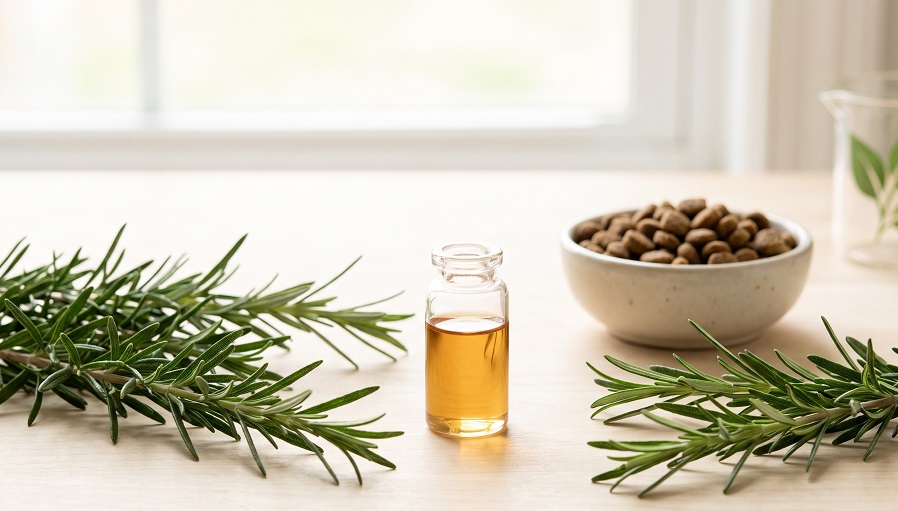
Oil-soluble: Dissolved in vegetable oil (sunflower or MCT), ideal for fat-based coatings and dry kibble applications
Water-soluble: Powder or emulsion form, suitable for wet food, treats, and pet supplements
Most dry kibble manufacturers prefer oil-soluble grades applied as a post-extrusion coating, while wet food and treat producers typically use water-soluble powder forms.
Appearance and Sensory Profile
Quality rosemary extract for pet food should be a fine powder (water-soluble) or dark amber oil (oil-soluble) with a characteristic herbal aroma. Strong or off-putting odors may indicate over-processing or low-grade raw material.
Application Rate and Dosage Guidelines
Recommended inclusion rates for rosemary extract in pet food depend on fat content, processing conditions, and target shelf life:
Application
Fat Content
Dosage (15% carnosic acid)
Target Shelf Life
Dry kibble (standard)
8%-12%
150-300 ppm
12-18 months
Dry kibble (high-fat, fish-based)
15%-20%
300-500 ppm
12-18 months
Semi-moist treats
10%-15%
200-400 ppm
9-12 months
Wet food (canned/pouch)
5%-10%
100-200 ppm
24-36 months
Pet supplements (chews, powders)
Variable
500-1000 ppm
18-24 months
These ranges are starting points; optimization trials using peroxide value (PV) and TBARS (thiobarbituric acid reactive substances) testing are recommended for each specific formulation.
Regulatory Status Across Markets
United States (AAFCO / FDA)
Rosemary extract is recognized by AAFCO as a safe natural preservative for dog and cat food. The FDA does not require pre-market approval for rosemary extract used at standard preservation levels. Manufacturers must comply with 21 CFR Part 573 for food additive regulations and ensure the extract is produced under GMP conditions.
European Union (EFSA)
Rosemary extract is approved as a feed additive in the EU under Regulation (EC) No 1831/2003 and is listed in the European Feed Additives Register. Maximum permitted levels vary by animal species and feed type; for dogs and cats, typical limits range from 150-500 ppm total carnosic acid equivalent.
Other Major Markets
Canada: Permitted as a preservative in livestock and pet feeds under the Canadian Feed Regulations
Japan: Approved under the Japanese Feed Additive Specifications
Australia/NZ: Permitted under the Australian Code of Good Manufacturing Practice for pet food
Always confirm current regulatory status with your local compliance team before specifying rosemary extract for a new market.
Quality Documentation Every Supplier Should Provide
When sourcing rosemary extract for pet food, the following documentation is essential:
Certificate of Analysis (COA): Confirms carnosic acid content, loss on drying, heavy metals, microbiology, and residual solvents
Material Safety Data Sheet (MSDS): Required for handling and transport
Non-GMO statement: Important for clean-label positioning
Allergen declaration: Most rosemary extracts are allergen-free, but always verify
Country of origin: China, Morocco, Spain, and Tunisia are major raw material sources
Shelf life statement: Typically 24 months when stored in sealed containers below 25°C
Suppliers that control their own raw material sourcing and extraction processes can offer better consistency and traceability than traders who buy and resell.
3. Documentation Speed
B2B pet food manufacturers often need COAs, MSDS, and regulatory documents within 24-48 hours. Evaluate suppliers on their responsiveness and documentation systems.
4. MOQ and Lead Time
Standard MOQ for rosemary extract is typically 25 kg (sample) to 500 kg (bulk), with lead times of 7-15 days for stock grades and 21-30 days for custom specifications.
5. Technical Support
The best suppliers offer application support, including dosage optimization, compatibility testing, and reformulation guidance.
Common Pitfalls When Sourcing Rosemary Extract
Based on our experience supplying pet food manufacturers across North America and Europe, here are the most common issues to avoid:
Buying on price alone: Low-cost rosemary extracts often have lower carnosic acid content, requiring higher inclusion rates that negate the savings
Specifying only “rosemary extract”: Always specify carnosic acid percentage, not just “rosemary extract” — concentrations vary widely
Ignoring heavy metals: Rosemary can accumulate heavy metals from soil; always request heavy metal testing on the COA
Not requesting sensory evaluation: Some extracts have strong flavors that can affect palatability, especially in treats
Sourcing Rosemary Extract: Next Steps
If you’re evaluating rosemary extract for a pet food formulation, we recommend requesting samples from multiple suppliers and conducting side-by-side trials using peroxide value (PV) testing at 4-week intervals over a 12-week period.
New Product Launch: Water-Soluble Rosemary Extract Carnosic Acid 10% Now Available Meta description: Announcing our new water-soluble rosemary extract specification…