Standardized Rosemary Extract (Rosmarinus officinalis L.) with ursolic acid (5% to 25%) specifications. Sourced through qualified production partners for dietary supplement and cosmetic manufacturers.
✉ Request COA via Email
Request Free Sample
Request Quote
Available Specifications
Per RSU-001 (Verified 2026-09-20):
| Specification Level | Active Marker |
|---|
| Ursolic Acid 5% (Entry-level) | HPLC |
| Ursolic Acid 10% (Standard) | HPLC |
| Ursolic Acid 15% (Mid-tier) | HPLC |
| Ursolic Acid 20% (Premium) | HPLC |
| Ursolic Acid 25% (High-Purity) | HPLC |
Specifications subject to product requirements and destination-market regulations.
Product Overview
| Botanical source | Rosmarinus officinalis L. |
| Part used | Leaf |
| Active marker | Ursolic Acid (also contains Carnosic Acid, Carnosol) |
| Extraction | Hydroalcoholic or supercritical CO2 extraction |
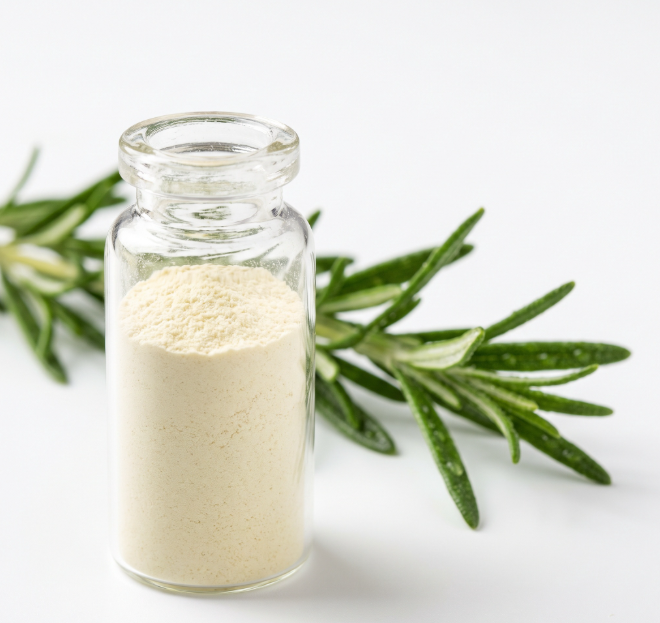
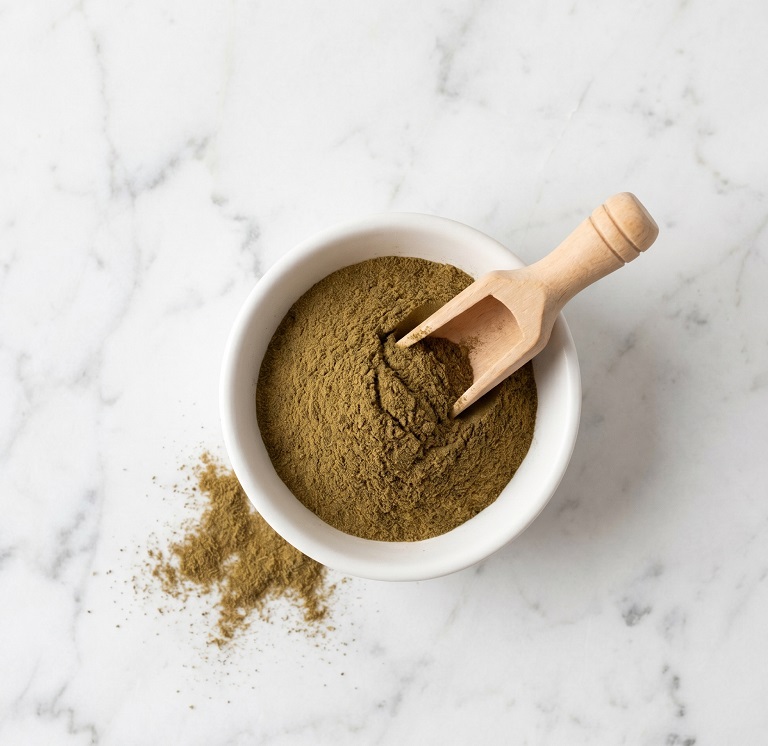
| Form | Yellow-brown to green fine powder |
| CAS No. | 77-52-1 (Ursolic Acid) / 84604-14-8 (Rosemary extract) |
| Solubility | Oil-soluble (with carrier for water-dispersible variants) |
Technical Specifications
| Test Item | Specification | Method |
|---|
| Appearance | Yellow-brown to green fine powder | Visual |
| Odor & Taste | Characteristic, slightly bitter | Organoleptic |
| Mesh Size | 80 mesh, 95% pass | Sieve analysis |
| Loss on Drying | ≤ 5.0% | USP <731> |
| Ash | ≤ 5.0% | USP <281> |
| Heavy Metals (Pb) | ≤ 3 ppm | ICP-MS |
| Heavy Metals (As) | ≤ 1 ppm | ICP-MS |
| Heavy Metals (Cd) | ≤ 1 ppm | ICP-MS |
| Heavy Metals (Hg) | ≤ 0.1 ppm | ICP-MS |
| Total Plate Count | ≤ 1,000 CFU/g | USP <2021> |
| Yeast & Mold | ≤ 100 CFU/g | USP <2021> |
| E. coli / Salmonella | Negative | USP <2022> |
All specifications subject to product specification and destination-market requirements.
Quality & Documentation
- Certificate of Analysis (COA) per batch with HPLC verification of ursolic acid
- Heavy metals testing panel (Pb, As, Cd, Hg) via ICP-MS
- Microbiology panel: Total Plate Count, Yeast & Mold, E. coli, Salmonella
- Material Safety Data Sheet (MSDS) documentation
- Non-GMO statement
- Allergen statement
- Pesticide residue testing (multi-residue screen)
- Third-party SGS testing available upon request
- Carnosic acid content (where applicable) verified via HPLC
Applications
- Dietary Supplements: Considered for use in antioxidant and metabolism-oriented formulations.
- Traditional Herbal Preparations: Suitable for use in traditional Western herbal formulations.
- Functional Food & Beverage: Considered for use as natural preservative and antioxidant in food applications.
- Cosmetic & Personal Care: Considered for use in skincare formulations for antioxidant properties. Oil-soluble variant available for direct formulation.
Why Source from Nourish Ingredients?
- Specification Matching: Five specification levels (5% to 25%) to match your formulation positioning needs, including oil-soluble and water-dispersible variants.
- Supplier Verification: Production partners maintain FSSC 22000, BRCGS, EU Organic, USDA Organic, and FAMI-QS certifications.
- Sample Comparison: 25-100g samples available for specification evaluation and laboratory comparison.
- Third-Party Testing: SGS verification available for ursolic acid, carnosic acid, heavy metals, and microbiology.
- Documentation Support: Comprehensive documentation package including COA, MSDS, allergen, and Non-GMO statements.
Supply & Ordering
- Sample Availability: 25-100g samples available; standard samples ship within 5-7 business days.
- Minimum Order Quantity (MOQ): 25 kg for standard specifications; smaller quantities available for evaluation.
- Lead Time: 7-15 business days from order confirmation, subject to specification and quantity.
- Packaging: 25 kg fiber drum with double food-grade PE liner; custom packaging available upon request.
- Shipping: Worldwide shipping via air, sea, or courier; documentation prepared for destination-market customs clearance.
Frequently Asked Questions
Q1: What's the difference between Ursolic Acid 5% and 25%?
The 5%/25% difference reflects total ursolic acid content measured via HPLC. Higher ursolic acid content is positioned for premium and high-purity applications in cosmetics and dietary supplements.
Q2: Can Rosemary Extract be combined with other herbs?
Rosemary Extract is commonly combined with other herbs in antioxidant and preservative formulations. We recommend consulting with your formulation team and requesting compatibility documentation for specific combinations.
Q3: Is Rosemary Extract safe for daily long-term use?
Rosemary has been used in traditional and food applications for centuries. Specific dosage recommendations depend on intended application and destination-market regulations. Documentation is available upon request from production partners.
Q4: What's the regulatory status in the EU?
Rosemary Extract is permitted as a food supplement ingredient and natural preservative in the EU. Specific regulatory status depends on intended application and labeling. Documentation available upon request.
Q5: What plant sources are used for Rosemary Extract?
Our Rosemary Extract is sourced from Rosmarinus officinalis L. leaves, with carnosic acid and carnosol as co-occurring marker compounds.
Q6: How is the ursolic acid content measured?
Ursolic acid content is quantified via HPLC per industry-standard methods. Carnosic acid and carnosol are also reported on the COA when applicable.
Q7: What's the typical MOQ?
Standard MOQ is 25 kg for most specifications. Smaller quantities (5-10 kg) are available for evaluation purposes.
Q8: Do you offer custom specifications?
Yes. Custom specifications (e.g., specific ursolic acid percentages, oil-soluble vs water-dispersible variants, specific carnosic acid ratios) can be discussed with our coordination team.
Q9: What documentation is available?
Standard documentation includes COA, MSDS, allergen statement, Non-GMO statement, and pesticide residue testing. Additional documentation (organic certification, kosher/halal, etc.) is available upon request from production partners.
Related Resources
Request Sample & Quote
Request Free Sample →
Request Quote →
Compliance Note
Data marked as "typical" reflects industry standards; specific values vary by supplier and batch. Documentation including COA, MSDS, allergen, and Non-GMO documentation is available upon request from production partners.
About Nourish Ingredients: We are a China-based sourcing partner for botanical extracts and nutraceutical ingredients. We coordinate supply for international brands — from specification matching to delivery. Production partners maintain FSSC 22000, BRCGS, EU Organic, USDA Organic, FAMI-QS certifications. Documentation available upon request.
For ingredient sourcing inquiries: ashely@nourishingr.com
Reviewed by: Nourish Ingredients Editorial Team Version: 2.3 Last updated: 2026-09-20