

Insights
Botanical Extract Supplier USA: 2026 Buyer’s Guide
Why US Buyers Need Specialized Botanical Extract Suppliers The United States is the world’s largest importer of botanical extracts, with…
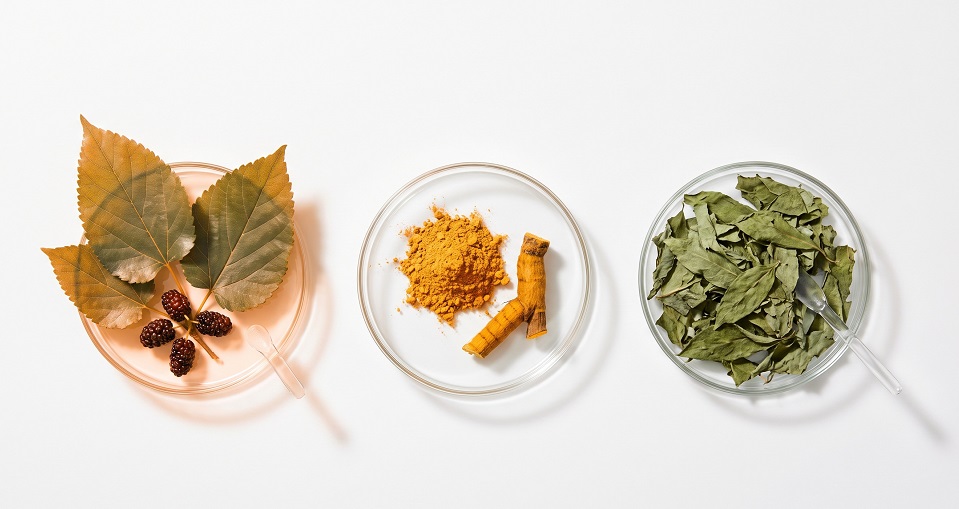
For formulators of metabolic health supplements, three botanical ingredients stand out for their evidence base and mechanism diversity: mulberry leaf extract (DNJ), berberine HCl, and gymnema leaf extract. Each offers distinct mechanisms, clinical profiles, and formulation characteristics — and they are often combined in complementary formulations.
This comparison examines each ingredient across mechanism, clinical evidence, dosage, and formulation synergies.
Standardized to 1%-10% DNJ (1-Deoxynojirimycin), derived from Morus alba leaves.
Primary mechanism: Alpha-glucosidase inhibition in the intestinal brush border, slowing carbohydrate digestion and reducing post-meal glucose absorption.
Secondary mechanisms: May support insulin sensitivity through reduced postprandial glucose load.
Clinical evidence: Multiple randomized controlled trials have shown reductions in postprandial glucose and insulin levels. A 2020 meta-analysis of 18 studies concluded that mulberry leaf extract significantly reduces fasting blood glucose in subjects with impaired glucose tolerance.
Typical dosage: 300-600 mg of 5% DNJ extract, 15-30 minutes before carbohydrate-rich meals.
Tolerability: Generally well-tolerated; mild GI effects possible at high doses.
For a deep dive on mulberry leaf extract, see our complete buyer’s guide.
Standardized to 97%-98% berberine HCl, derived from various Berberis species (e.g., Berberis aristata, Phellodendron amurense).
Primary mechanism: AMPK (AMP-activated protein kinase) activation, supporting glucose uptake, lipid metabolism, and mitochondrial function.
Secondary mechanisms: May support gut microbiome balance; modulates bile acid metabolism.
Clinical evidence: Berberine has been studied extensively, with multiple meta-analyses supporting effects on fasting blood glucose, HbA1c, and lipid profiles. Direct comparisons with metformin have shown comparable effects in some populations, though berberine is not a pharmaceutical substitute.
Typical dosage: 500 mg, 2-3 times daily with meals (1,000-1,500 mg total daily).
Tolerability: Generally well-tolerated; GI side effects (constipation, diarrhea) are the most common complaints. Cycling (8 weeks on, 2 weeks off) is sometimes recommended for long-term use.
See our berberine HCl product page.
Standardized to 25%-75% gymnemic acids, derived from Gymnema sylvestre leaves.
Primary mechanism: Modulation of sweet taste receptors on the tongue, reducing sugar cravings; may support pancreatic beta cell function.
Secondary mechanisms: May support intestinal glucose absorption regulation; modest alpha-glucosidase inhibition at higher concentrations.
Clinical evidence: Several small-to-medium clinical trials have shown reductions in fasting blood glucose and HbA1c in type 2 diabetic populations, though the evidence base is smaller than for mulberry leaf or berberine.
Typical dosage: 200-600 mg daily, typically split into two doses.
Tolerability: Generally well-tolerated; may cause mild GI effects at high doses.
| Factor | Mulberry Leaf (DNJ) | Berberine HCl | Gymnema Extract |
|---|---|---|---|
| Primary mechanism | Alpha-glucosidase inhibition | AMPK activation | Sweet taste receptor modulation |
| Site of action | Intestinal lumen | Multiple tissues (liver, muscle, fat) | Tongue / pancreas |
| Typical daily dosage | 300-600 mg (5% DNJ) | 1,000-1,500 mg | 200-600 mg |
| Cost per kg (approx.) | $50-150 | $80-200 | $40-120 |
| Time to effect | Within 30-60 minutes | 2-4 weeks (cumulative) | 2-4 weeks (cumulative) |
| Evidence strength | Moderate (multiple RCTs, meta-analysis) | Strong (extensive research) | Moderate (smaller evidence base) |
| Best positioning | Carb management / post-meal support | Comprehensive metabolic support | Sugar craving reduction |
| Drug interactions | Few known | Multiple (CYP3A4 substrate) | Few known |
| Pregnancy / lactation | Avoid (insufficient data) | Avoid (insufficient data) | Avoid (insufficient data) |
| Sensory profile | Mild bitterness | Bitter (significant) | Mild to moderate bitterness |
These three ingredients are frequently combined for comprehensive metabolic support:
Complementary mechanisms: DNJ works in the intestinal lumen to slow carbohydrate absorption, while berberine activates AMPK in target tissues. Together, they address post-meal glucose response and longer-term metabolic function.
Suggested ratio: 1 part mulberry (5% DNJ) to 3-5 parts berberine HCl
Synergistic glucose support: DNJ slows carbohydrate absorption while gymnema may reduce sugar cravings and support pancreatic function. This combination is popular in “carb management” formulations.
Suggested ratio: 1 part mulberry (5% DNJ) to 0.5-1 part gymnema (25% gymnemic acids)
Comprehensive metabolic support with sugar craving management. Useful for consumers focused on both metabolic markers and dietary behavior.
Suggested ratio: 3 parts berberine to 1 part gymnema
The most comprehensive metabolic health formulations combine all three, often with complementary ingredients like chromium, green tea extract, or cinnamon bark extract.
For example, a typical 4-mechanism combination might include:
For an overview of weight management ingredient combinations, see our weight management supplements guide.
All three ingredients are permitted in dietary supplements. Structure-function claims must be supportable by evidence and must include the standard DSHEA disclaimer.
All three are permitted in food supplements under EU Directive 2002/46/EC. Mulberry leaf extract and gymnema have traditional use histories that support their use; berberine requires specific regulatory positioning. None of the three have EFSA-approved health claims for blood sugar or weight management.
All three ingredients have Natural Product Numbers (NPNs) with permitted claims under Health Canada’s framework.
Each ingredient’s regulatory status varies by country. Verify status in target markets before formulation.
For each ingredient, specify the following in your supplier COA:
Sourced primarily from China, with premium quality from Zhejiang and Sichuan provinces. Late spring and early summer harvests typically have the highest DNJ content. Look for suppliers with vertical integration from cultivation through extraction.
Sourced primarily from China and India, from Berberis aristata or Phellodendron amurense. Look for HPLC-verified berberine content and documentation of extraction methods.
Sourced primarily from India, where Gymnema sylvestre is cultivated. Look for standardized gymnemic acid content and traceability to cultivation regions.
For formulators developing metabolic health supplements, request samples at multiple active compound concentrations and conduct small-scale formulation trials before scaling up.
Nourish Ingredients supplies mulberry leaf extract (1%-10% DNJ), berberine HCl (97%-98%), and complementary metabolic health ingredients under FSSC 22000, BRC, KOSHER, HALAL, and FAMI-QS certified processes with complete documentation.
For samples, specification sheets, or formulation guidance, contact our team.
Why US Buyers Need Specialized Botanical Extract Suppliers The United States is the world’s largest importer of botanical extracts, with…
Application How Rosemary Extract Extends Shelf Life in Food: A Formulator's Guide June 2026 · 6 min read As consumer…
Trade Show Vitafoods Europe 2026 Recap: Key Trends in Botanical Extract Sourcing June 2026 · 7 min read Our team…